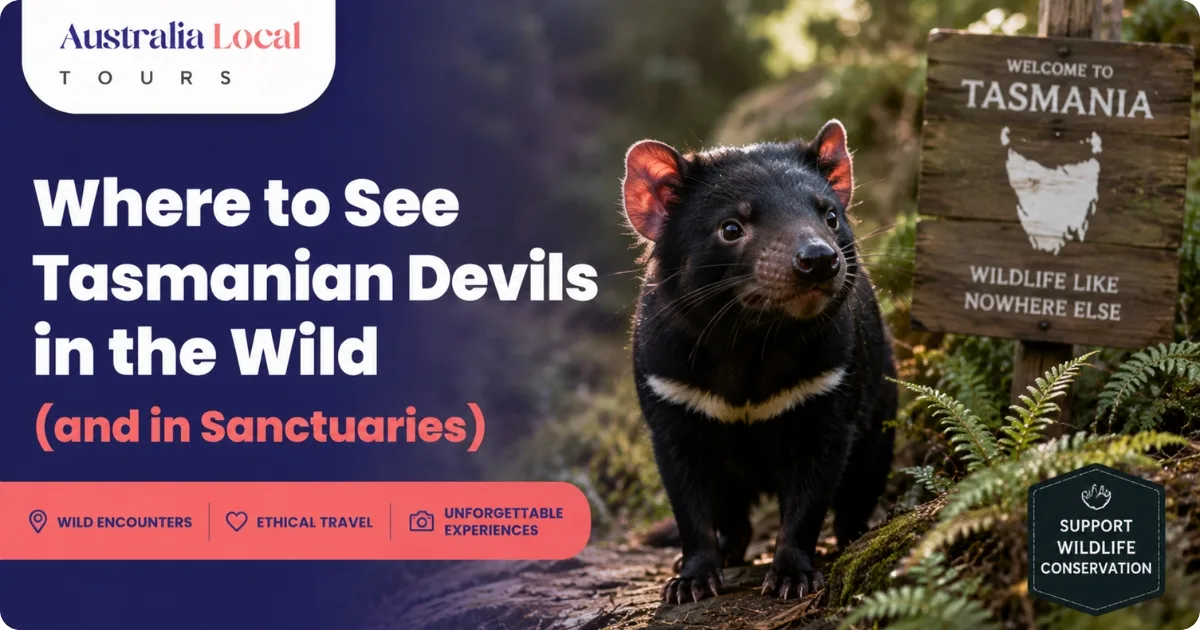
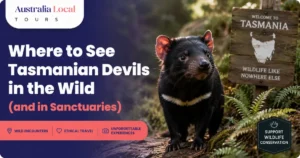
Tasmania happens to be the home of one of the most misunderstood yet iconic animals in the world. The Tasmanian devil. Stocky, jet-black, and famously loud, this carnivorous marsupial holds the title of the world’s largest of its kind. It used to be found across the mainland, but now it only exists in Tasmania. Making the island the only place on earth where this animal can be witnessed in its natural habitat. Whether you’re a wildlife enthusiast or simply curious, knowing where and how to find them transforms a Tassie trip into something truly unforgettable.
What Makes Them Unique?
The feisty little thing stands around 30 cm and reaches up to 65cm from head to tail. What they lack in stature, it compensates in one of the most powerful PSI body masses of any predatory land mammal. Its thick black fur, pungent scent glands, and bone-chilling screech make it instantly recognisable. Devils are largely crepuscular, emerging around dusk to scavenge carrion, and play a vital role in maintaining ecosystem balance by cleaning up dead animals before feral species can take hold.
1. Threats That They Face Presently
Although they are fierce and bold, these little marsupials face a threat from Devil Facial Tumour Disease (DFTD), an infectious cancer that causes debilitating tumours on the mouth and face, and has resulted in an 80% decline in devil sightings over the past 20 years. Loss of Habitat and Road Strikes worsens the problem further. There is a certain program called Save the Tasmanian Devil, which was established in 2003 as a collaboration between the Australian and Tasmanian governments and continues working to ensure an enduring and ecologically functional wild population. It has been successful in making meaningful progress. Although habitat protection remains the number one priority.
2. Best Places to See Them
Tasmanian devils are seen all over the island. But most commonly found in the forests and coastal heathlands of Tasmania’s eastern half and north-west coast. Cradle Mountain–Lake St Clair National Park is one of the most popular regions to go and witness them in person. Alongside platypuses, echidnas, and quolls. The Central Plateau Conservation Area, part of the Tasmanian Wilderness World Heritage Area, is another stronghold where devils rest in dense scrub during daylight hours
3. A Vital Refuge in North West
The Arthur-Pieman Conservation Area in Tasmania’s north-west, forming part of the larger Tarkine/takayna region, is among the least affected areas by DFTD. Devils here show higher genetic diversity than elsewhere on the island. This is a critical distinction given the species’ naturally low genetic variation and limited ability to resist disease. Remarkably, a small number of animals have recovered from DFTD, which has historically carried a near 100% mortality rate. Making the protection of this wilderness corridor more important than ever for the species’ long-term survival.
4. Sanctuaries Worth Visiting
These little creatures might be fireballs, are naturally elusive, and are most active after dark. Wildlife sanctuaries offer the most reliable close encounters for visitors. Bonorong Wildlife Sanctuary in Brighton specializes in Tasmanian wildlife education, care, and rehabilitation. While Trowunna Wildlife Park in Mole Creek has been caring for native animals for over 30 years. Tasmanian Devil Unzoo on the Tasman Peninsula takes an open-range approach to devil encounters. Devils@Cradle at Cradle Mountain offers an intimate after-dark feeding experience. Each sanctuary pairs well with broader Tasmania itineraries across the island’s most scenic regions.
Planning Your Itinerary
Devils are mostly nocturnal animals and active from dusk onwards. Early evening walks through national park corridors offer the best chances of a sighting. The Cradle Mountain region pairs naturally with a wildlife-focused stop at Devils@Cradle, while the Launceston and east coast routes open up access to Trowunna and the Maria Island ferry crossing for gold coast whale tours. At Australia Local Tours, our packages are designed around exactly these kinds of authentic, offbeat encounters. The ones that go beyond highlights and set you off where locals go. Check our website to know more!
FAQs
Q1. Where is the best place to see Tasmanian devils in the wild? Cradle Mountain–Lake St Clair National Park and the Arthur-Pieman Conservation Area in north-west Tasmania are the most reliable locations for sightings.
Q2. Are Tasmanian devils dangerous to humans? Tasmanian devils are shy and elusive by nature, preferring to avoid contact rather than confront people directly when encountered.
Q3. What time of day are Tasmanian devils most active? Tasmanian devils are nocturnal and most active from dusk onwards. Early evening walks through national parks offer the best sighting chances.
Q4. Which sanctuaries offer the best Tasmanian devil encounters? Bonorong Wildlife Sanctuary, Trowunna Wildlife Park, Tasmanian Devil Unzoo, and Devils@Cradle all offer reliable and educational close encounters with Tasmanian devils.
Q5. What threatens the survival of Tasmanian devils today? Devil Facial Tumour Disease, habitat loss, and road strikes are the primary threats. Conservation programs continue making meaningful progress protecting wild populations.